Overview
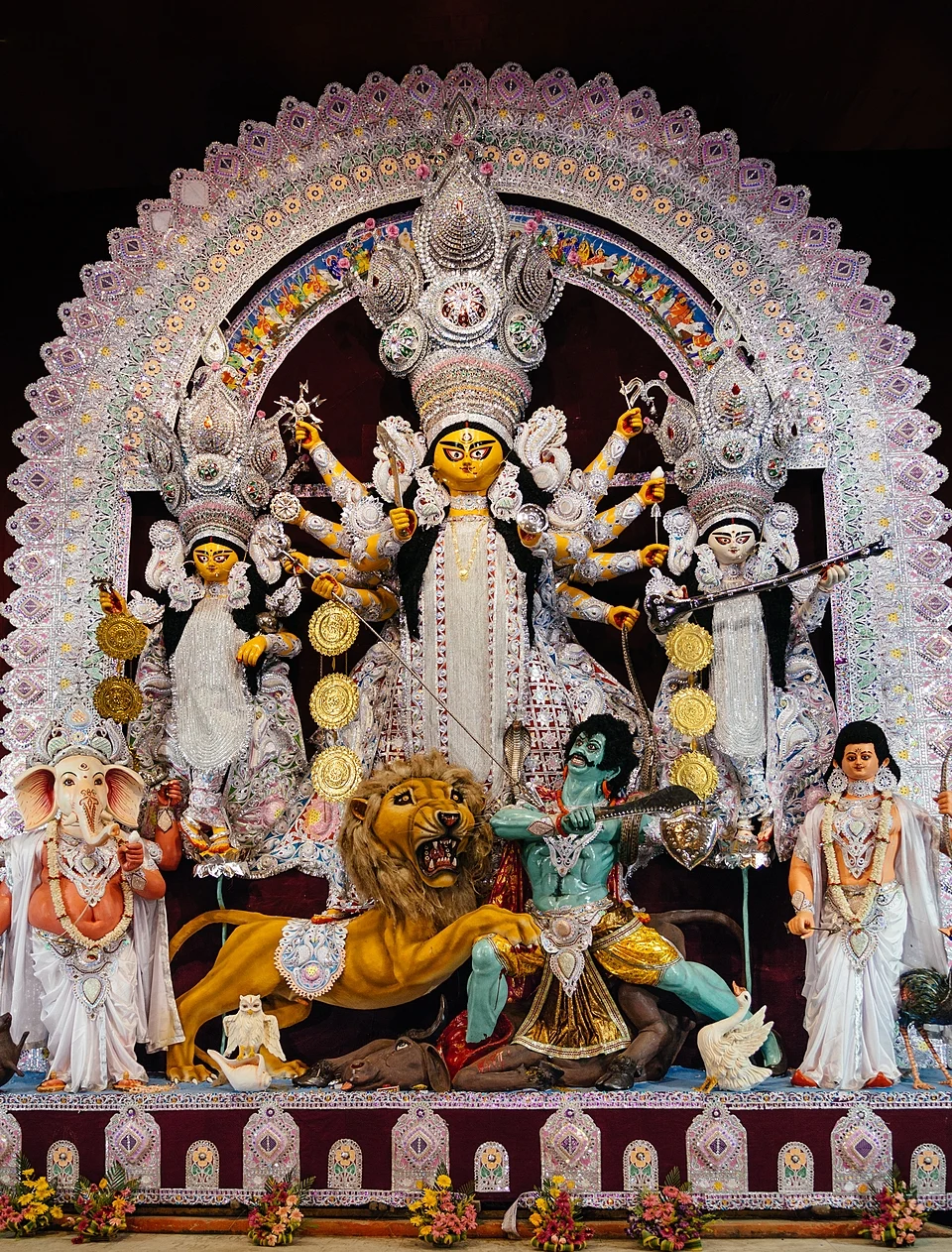
Goddess Durga is a central form of Devi, worshipped as divine power and protective motherhood. Her traditions are especially visible during Navratri and Durga Puja, while Durga temples and household worship are found across India.
Significance
Durga is celebrated in traditions that emphasise the victory of divine power over forces of disorder. The Devi Mahatmya is an important textual source in Durga worship, and different regions preserve distinctive forms, names and ritual practices.
Traditional context
Durga worship belongs to the wider Shakta tradition while also appearing across broader Hindu devotional life. Navratri, Durga Puja and local temple festivals express this devotion differently rather than following one universal ritual sequence.
Worship significance
Devotees worship Durga through puja, prayer, recitation, aarti, fasting and temple darshan according to family and regional practice. Darshn connects Durga to relevant festival and devotional pages instead of repeating the same sacred material on every page.
Sacred places
Durga and Devi worship is represented by Shakti temples and local goddess shrines across India. Darshn links only governed sacred-place and temple relationships so visitors can continue from the deity to relevant places with canonical identity.