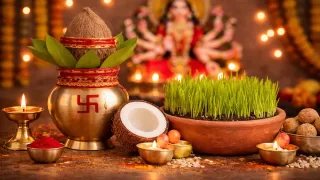
Navratri
Navratri is observed over nine sacred nights devoted to forms of Devi. Worship, fasting, prayer and regional traditions such as garba and Durga worship shape the celebration across India.
About Navratri
About Navratri
Navratri means nine nights and is devoted to forms of Devi. The festival is observed through worship, fasting, prayer and community traditions, but its expression changes considerably across India. The autumn Sharad Navratri is especially visible, while other Navratri observances are also followed in particular traditions.
Nine nights of Devi worship
Many devotees dedicate the period to the Divine Feminine and follow a daily rhythm of puja, prayer or fasting. Specific forms of Devi, ritual sequences and food practices vary by household, temple and sampradaya. Darshn therefore presents shared context without treating one regional practice as universal.
Regional traditions
Garba and dandiya gatherings are strongly associated with Navratri in Gujarat. In eastern India, the later days overlap with the great public celebration of Durga Puja. Other regions have their own temple, household and community traditions, culminating around Ashtami, Navami or Vijayadashami according to local practice.
Explore Devi worship
Use the Durga guide to continue into deity information, associated temples and prayers. Darshn also connects Navratri with Durga Puja where the relationship helps explain the wider festival season rather than duplicating the two observances.
Dates and local practice
Navratri dates follow the Hindu calendar and local observance details can vary. Darshn displays a future date as verified only after the governed occurrence has been checked. For temple visits and public events, confirm current local schedules before travelling.