Overview
Kaal Bhairav (also written Kal Bhairav or Kala Bhairava) is a fierce and protective form of Shiva. In Varanasi, devotees especially honour him as Kashi Kotwal, the guardian of the sacred city. The Sanskrit name Bhairava is associated with an awe-inspiring aspect of divinity. Worshippers approach this form of Shiva with reverence, seeking courage, discipline and protection. The tradition is not limited to Varanasi: forms of Bhairava are worshipped across India, including in Shaiva and Shakta traditions. Local rituals, iconography and customs vary between shrines.
Significance
The significance of Kaal Bhairav lies in the protective and time-related aspects of Shiva. In devotional interpretation, his fierce appearance represents the overcoming of fear, ego and wrongdoing, rather than a promise of supernatural results. In Kashi, the title Kotwal means guardian or custodian. The city’s Kaal Bhairav Temple is an important destination for pilgrims, and some devotees traditionally seek his blessings as part of their wider Kashi pilgrimage. This is a religious practice, not a mandatory condition for visiting Varanasi. Devotional accounts associate Bhairava with sacred narratives in the Shiva and Skanda Purana traditions; different retellings should be understood as sacred literature rather than independently established historical events.
Traditional context
In Shaiva traditions, Bhairava is a manifestation of Shiva associated with protection, the passage of time and the consequences of human actions. Stories about Bhairava appear in Puranic and regional religious literature, and their details differ across communities. The well-known narrative concerning Brahma and Bhairava is interpreted as a lesson about pride and responsibility. In Varanasi, the Kotwal of Kashi tradition gives this form a special place in the city’s sacred geography. Other forms, including Batuk Bhairav, are related in the broader tradition but should not be confused with the particular Kaal Bhairav shrine.
Iconography
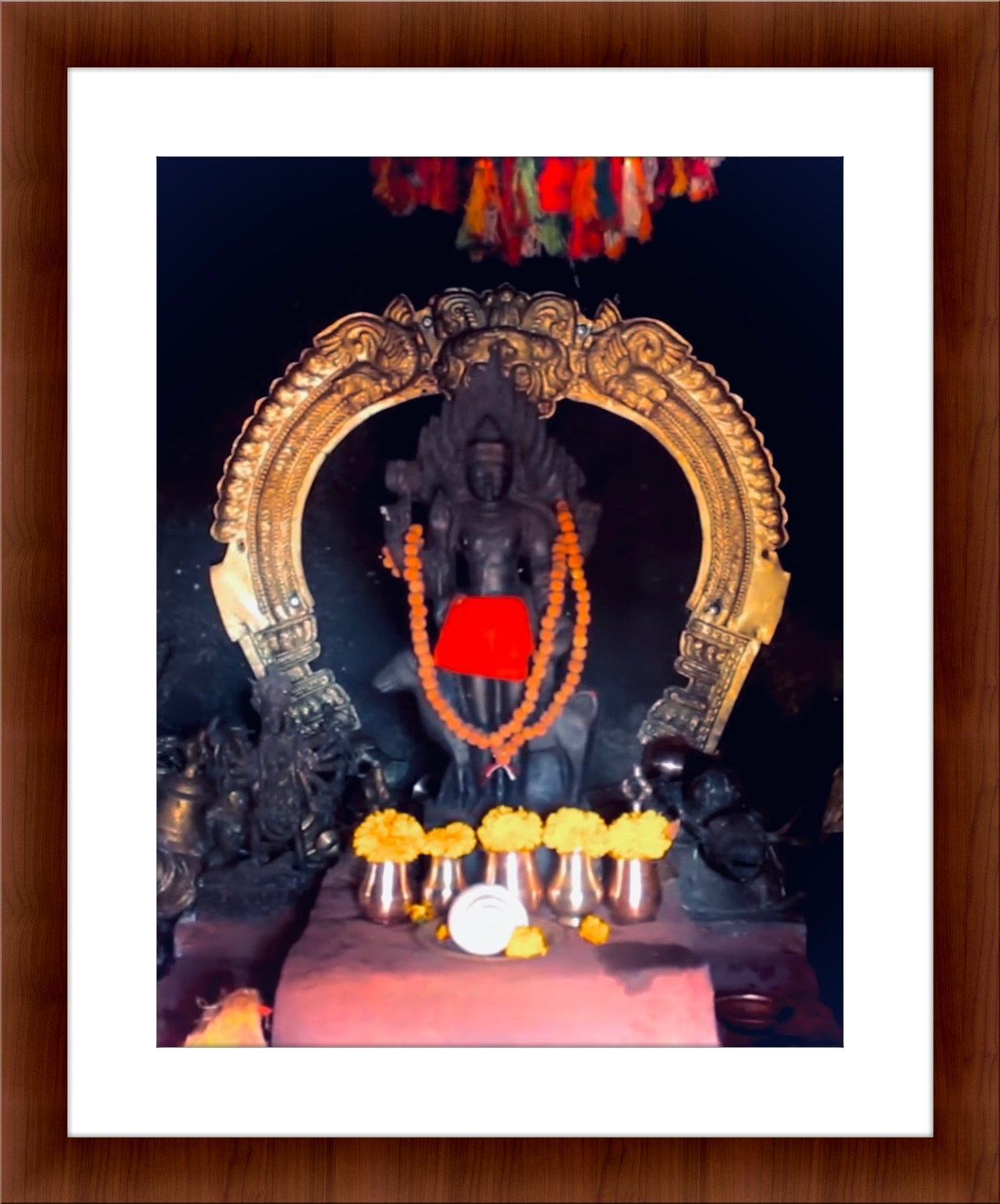
Bhairava is commonly represented with a fierce expression, a trident and other attributes of Shiva. A dog is traditionally associated with Bhairava as his vahana, or vehicle. Depictions differ considerably: some are standing figures, some are seated, and some shrines emphasize a face or mask. The Kashi shrine has its own established form and ritual presentation; photographs or illustrations from unrelated Bhairava temples should not be described as depicting the Varanasi sanctum. The symbolism communicates vigilance, fearlessness and protection in devotional interpretation.
Forms and manifestations
Kala Bhairava is one of several Bhairava forms described in Shaiva traditions. The Ashta Bhairavas, or eight Bhairavas, are named and understood differently in various regional texts and lineages. Batuk Bhairav is often represented as a youthful form and has a distinct shrine tradition. Devotees should distinguish these forms while recognising their shared association with Shiva. Local temple naming and worship practice are the best guides to the form honoured at a particular shrine.
Worship significance
Devotees pray to Kaal Bhairav for protection, courage, clarity and the strength to act responsibly. Sundays and Tuesdays are important days at the Kashi temple according to the official Kashi pilgrimage portal. A protective thread known as Bhairav Raksha Sutra is associated with local devotional practice. Offerings and access rules differ by temple; follow the instructions of the shrine rather than relying on informal claims. Spiritual benefits are matters of belief, not guaranteed outcomes.
Regional traditions
Kashi is especially associated with Kaal Bhairav as the Kotwal of the city. Bhairava worship also appears in other parts of India, with distinct regional rituals and forms. In some communities Bhairava is a guardian of temples and sacred boundaries; elsewhere he has an important role in tantric and folk religious traditions. These practices should not be presented as identical everywhere. In Varanasi, the Kaal Bhairav Temple near Vishesharganj is the relevant place for the Kotwal of Kashi tradition.
Sacred places
Kaal Bhairav Temple, Varanasi, Uttar Pradesh — the major shrine associated with the Kotwal of Kashi tradition. The temple is situated in the old-city area near Vishesharganj. Pilgrims may combine the visit with other Kashi shrines, allowing extra time for narrow lanes and crowds. Official information: https://www.darshan.kashi.gov.in/listing-details/shri-kaal-bhairav-temple and https://varanasi.nic.in/temples-of-importance/.
Additional knowledge
Kaal Bhairav is a deity form, while Kaal Bhairav Temple is a specific physical shrine in Varanasi. They should have separate canonical pages connected to each other. The word Kotwal describes the protective role attributed to the deity in Kashi tradition. This devotional title does not imply a civic office or a requirement that every visitor worship at the shrine. References to the deity’s attributes are traditional interpretations, not claims that spiritual practices guarantee particular life events.