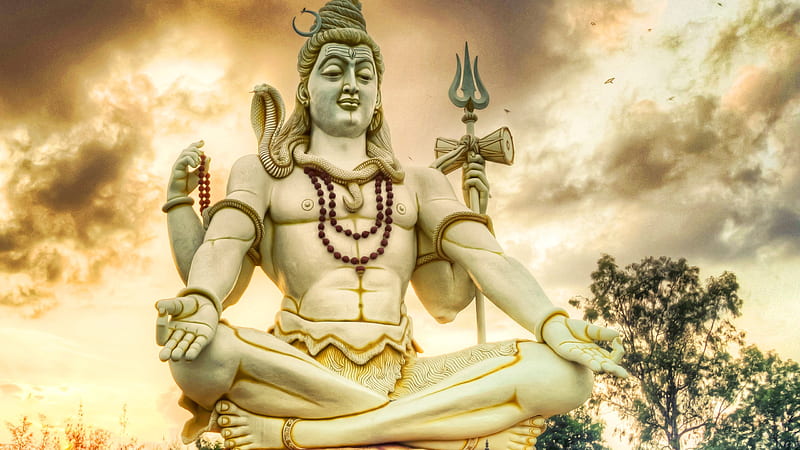
સ્તોત્ર · Shiva
Shiva Tandava Stotram
Shiva Tandava Stotram is a Sanskrit hymn traditionally attributed to Ravana, praising Shiva's fierce cosmic dance through vivid imagery of Ganga, the crescent moon, serpents, fire and rhythmic percussion.
ભક્તિ પાઠ
१. श्लोक
जटाटवीगलज्जलप्रवाहपावितस्थले गलेऽवलम्ब्य लम्बितां भुजङ्गतुङ्गमालिकाम् । डमड्डमड्डमड्डमन्निनादवड्डमर्वयं चकार चण्डताण्डवं तनोतु नः शिवः शिवम् ॥ १॥
લિપ્યંતરણjaṭāṭavīgalajjalapravāhapāvitasthale gale'valambya lambitāṃ bhujaṅgatuṅgamālikām | ḍamaḍḍamaḍḍamaḍḍamanninādavaḍḍamarvayaṃ cakāra caṇḍatāṇḍavaṃ tanotu naḥ śivaḥ śivam || 1 ||
અર્થMay Shiva, whose neck is sanctified by the waters flowing from his forest-like matted locks, who wears a lofty serpent-garland and dances fiercely to the resonant damaru, grant us auspiciousness.
२. श्लोक
जटाकटाहसम्भ्रमभ्रमन्निलिम्पनिर्झरी- विलोलवीचिवल्लरीविराजमानमूर्द्धनि । धगद्धगद्धगज्ज्वलल्ललाटपट्टपावके किशोरचन्द्रशेखरे रतिः प्रतिक्षणं मम ॥ २॥
લિપ્યંતરણjaṭākaṭāhasambhramabhramannilimpanirjharī- vilolavīcivallarīvirājamānamūrdhani | dhagaddhagaddhagajjvalallalāṭapaṭṭapāvake kiśoracandraśekhare ratiḥ pratikṣaṇaṃ mama || 2 ||
અર્થMy devotion rests always in Shiva, whose head is adorned by the restless waves of the celestial Ganga in his matted locks, whose forehead blazes with fire, and whose crest bears the young crescent moon.
३. श्लोक
धराधरेन्द्रनंदिनीविलासबन्धुबन्धुर- स्फुरद्दिगन्तसन्ततिप्रमोदमानमानसे । कृपाकटाक्षधोरणीनिरुद्धदुर्धरापदि क्वचिद्दिगम्बरे मनो विनोदमेतु वस्तुनि ॥ ३॥
લિપ્યંતરણdharādharendranandinīvilāsabandhubandhura- sphuraddigantasantatipramodamānamānase | kṛpākaṭākṣadhoraṇīniruddhadurdharāpadi kvaciddigambare mano vinodametu vastuni || 3 ||
અર્થMay my mind delight in Shiva, the gracious companion of the daughter of the mountain king, whose compassionate glance restrains overwhelming adversity and whose vast presence transcends ordinary bounds.
४. श्लोक
जटाभुजङ्गपिङ्गलस्फुरत्फणामणिप्रभा- कदम्बकुङ्कुमद्रवप्रलिप्तदिग्वधूमुखे । मदान्धसिन्धुरस्फुरत्त्वगुत्तरीयमेदुरे मनो विनोदमद्भुतं बिभर्तु भूतभर्तरि ॥ ४॥
લિપ્યંતરણjaṭābhujaṅgapiṅgalasphuratphaṇāmaṇiprabhā- kadambakuṅkumadravapraliptadigvadhūmukhe | madāndhasindhurasphurattvaguttarīyamedure mano vinodamadbhutaṃ bibhartu bhūtabhartari || 4 ||
અર્થMay my mind find wondrous joy in the Lord of beings, whose tawny serpent and shining hood-jewel cast rich hues in every direction, and who wears the hide of a mighty elephant.
५. श्लोक
सहस्रलोचनप्रभृत्यशेषलेखशेखर- प्रसूनधूलिधोरणीविधूसराङ्घ्रिपीठभूः । भुजङ्गराजमालया निबद्धजाटजूटकः श्रियै चिराय जायतां चकोरबन्धुशेखरः ॥ ५॥
લિપ્યંતરણsahasralocanaprabhṛtyaśeṣalekhaśekhara- prasūnadhūlidhoraṇīvidhūsarāṅghripīṭhabhūḥ | bhujaṅgarājamālayā nibaddhajāṭajūṭakaḥ śriyai cirāya jāyatāṃ cakorabandhuśekharaḥ || 5 ||
અર્થMay Shiva, whose feet are grey with the flower-dust offered by the gods, whose matted locks are bound by the king of serpents, and whose crest bears the moon, bestow lasting prosperity.
६. श्लोक
ललाटचत्वरज्वलद्धनञ्जयस्फुलिङ्गभा- निपीतपञ्चसायकं नमन्निलिम्पनायकम् । सुधामयूखलेखया विराजमानशेखरं महाकपालिसम्पदे शिरोजटालमस्तु नः ॥ ६॥
લિપ્યંતરણlalāṭacatvarajvaladdhanañjayasphuliṅgabhā- nipītapañcasāyakaṃ namannilimpanāyakam | sudhāmayūkhalekhayā virājamānaśekharaṃ mahākapālisampade śirojaṭālamastu naḥ || 6 ||
અર્થMay the matted locks of the great Kapalin bring us spiritual wealth: his forehead-fire consumed the five-arrowed god of desire, the celestial leaders bow before him, and the crescent moon adorns his head.
७. श्लोक
करालभालपट्टिकाधगद्धगद्धगज्ज्वल- द्धनञ्जयाहुतीकृतप्रचण्डपञ्चसायके । धराधरेन्द्रनन्दिनीकुचाग्रचित्रपत्रक- प्रकल्पनैकशिल्पिनि त्रिलोचने रतिर्मम ॥ ७॥
લિપ્યંતરણkarālabhālapaṭṭikādhagaddhagaddhagajjvala- ddhanañjayāhutīkṛtapracaṇḍapañcasāyake | dharādharendranandinīkucāgracitrapatraka- prakalpanaikaśilpini trilocane ratirmama || 7 ||
અર્થMy devotion is to the three-eyed Shiva, whose blazing forehead-fire made the powerful god of desire its offering, and who is poetically praised as the unrivalled artist adorning the daughter of the mountain king.
८. श्लोक
नवीनमेघमण्डलीनिरुद्धदुर्धरस्फुरत्- कुहूनिशीथिनीतमःप्रबन्धबद्धकन्धरः । निलिम्पनिर्झरीधरस्तनोतु कृत्तिसिन्धुरः कलानिधानबन्धुरः श्रियं जगद्धुरंधरः ॥ ८॥
લિપ્યંતરણnavīnameghamaṇḍalīniruddhadurdharasphurat- kuhūniśīthinītamaḥprabandhabaddhakandharaḥ | nilimpanirjharīdharastanotu kṛttisindhuraḥ kalānidhānabandhuraḥ śriyaṃ jagaddhuraṃdharaḥ || 8 ||
અર્થMay Shiva, bearer of the universe, grant prosperity: his dark throat is compared to the deep darkness of a cloud-covered moonless night, while he bears the celestial river, wears an elephant hide, and is graced by the moon.
९. श्लोक
प्रफुल्लनीलपङ्कजप्रपञ्चकालिमप्रभा- ऽवलम्बिकण्ठकन्दलीरुचिप्रबद्धकन्धरम् । स्मरच्छिदं पुरच्छिदं भवच्छिदं मखच्छिदं गजच्छिदांधकच्छिदं तमन्तकच्छिदं भजे ॥ ९॥
લિપ્યંતરણpraphullanīlapaṅkajaprapañcakālimaprabhā- 'valambikaṇṭhakandalīruciprabaddhakandharam | smaracchidaṃ puracchidaṃ bhavacchidaṃ makhacchidaṃ gajacchidāndhakacchidaṃ tamantakacchidaṃ bhaje || 9 ||
અર્થI worship Shiva, whose dark throat is likened to the radiance of a fully opened blue lotus, and who is praised as the destroyer of desire, the three cities, worldly bondage, the sacrifice, the elephant-demon, Andhaka, and death itself.
१०. श्लोक
अखर्वसर्वमङ्गलाकलाकदम्बमञ्जरी- रसप्रवाहमाधुरीविजृम्भणामधुव्रतम् । स्मरान्तकं पुरान्तकं भवान्तकं मखान्तकं गजान्तकान्धकान्तकं तमन्तकान्तकं भजे ॥ १०॥
લિપ્યંતરણakharvasarvamaṅgalākalākadambamañjarī- rasapravāhamādhurīvijṛmbhaṇāmadhuvratam | smarāntakaṃ purāntakaṃ bhavāntakaṃ makhāntakaṃ gajāntakāndhakāntakaṃ tamantakāntakaṃ bhaje || 10 ||
અર્થI worship Shiva, drawn poetically like a bee to the overflowing sweetness of the clustered blossoms of every auspicious art, and praised again as the ender of desire, Tripura, worldly becoming, sacrifice, the elephant-demon, Andhaka, and death.
११. श्लोक
जयत्वदभ्रविभ्रमभ्रमद्भुजङ्गमश्वस- द्विनिर्गमत्क्रमस्फुरत्करालभालहव्यवाट् । धिमिद्धिमिद्धिमिद्ध्वनन्मृदङ्गतुङ्गमङ्गल- ध्वनिक्रमप्रवर्तितप्रचण्डताण्डवः शिवः ॥ ११॥
લિપ્યંતરણjayatvadabhravibhramabhramadbhujaṅgamaśvasa- dvinirgamatkramasphuratkarālabhālahavyavāṭ | dhimiddhimiddhimiddhvananmṛdaṅgatuṅgamaṅgala- dhvanikramapravartitapracaṇḍatāṇḍavaḥ śivaḥ || 11 ||
અર્થVictory to Shiva, whose terrible forehead-fire flares with the breath of the circling serpent and whose fierce Tandava unfolds in step with the lofty, auspicious rhythms of the mridanga.
१२. श्लोक
दृषद्विचित्रतल्पयोर्भुजङ्गमौक्तिकस्रजोर्- गरिष्ठरत्नलोष्ठयोः सुहृद्विपक्षपक्षयोः । तृणारविन्दचक्षुषोः प्रजामहीमहेन्द्रयोः समप्रवृत्तिकः कदा सदाशिवं भजाम्यहम् ॥ १२॥
લિપ્યંતરણdṛṣadvicitratalpayorbhujaṅgamauktikasrajor- gariṣṭharatnaloṣṭhayoḥ suhṛdvipakṣapakṣayoḥ | tṛṇāravindacakṣuṣoḥ prajāmahīmahendrayoḥ samapravṛttikaḥ kadā sadāśivaṃ bhajāmyaham || 12 ||
અર્થWhen shall I worship Sadashiva with true equanimity, seeing alike rough stone and a fine couch, serpent and pearl garland, precious jewel and clod, friend and foe, and ordinary people and mighty rulers?
१३. श्लोक
कदा निलिम्पनिर्झरीनिकुञ्जकोटरे वसन् विमुक्तदुर्मतिः सदा शिरःस्थमञ्जलिं वहन् । विलोललोललोचनो ललामभाललग्नकः शिवेति मन्त्रमुच्चरन् कदा सुखी भवाम्यहम् ॥ १३॥
લિપ્યંતરણkadā nilimpanirjharīnikuñjakoṭare vasan vimuktadurmatiḥ sadā śiraḥsthamañjaliṃ vahan | vilolalolalocano lalāmabhālalagnakaḥ śiveti mantramuccaran kadā sukhī bhavāmyaham || 13 ||
અર્થWhen shall I live joyfully in a secluded place by the celestial river, freed from distorted thought, hands raised in reverence, my attention fixed on Shiva as I continually utter his name?
१४. श्लोक
इमं हि नित्यमेवमुक्तमुत्तमोत्तमं स्तवं पठन्स्मरन्ब्रुवन्नरो विशुद्धिमेतिसन्ततम् । हरे गुरौ सुभक्तिमाशु याति नाऽन्यथा गतिं विमोहनं हि देहिनां सुशङ्करस्य चिन्तनम् ॥ १४॥
લિપ્યંતરણimaṃ hi nityamevamuktamuttamottamaṃ stavaṃ paṭhansmaranbruvannaro viśuddhimetisantatam | hare gurau subhaktimāśu yāti nā'nyathā gatiṃ vimohanaṃ hi dehināṃ suśaṅkarasya cintanam || 14 ||
અર્થThe verse praises regular recitation, remembrance, and utterance of this hymn as a path to inner purification and deep devotion to Shiva as guru; contemplation of Shankara is said to dispel delusion.
१५. श्लोक
पूजावसानसमये दशवक्त्रगीतं यः शम्भुपूजनपरं पठति प्रदोषे । तस्य स्थिरां रथगजेन्द्रतुरङ्गयुक्तां लक्ष्मीं सदैव सुमुखीं प्रददाति शम्भुः ॥ १५॥
લિપ્યંતરણpūjāvasānasamaye daśavaktragītaṃ yaḥ śambhupūjanaparaṃ paṭhati pradoṣe | tasya sthirāṃ rathagajendraturaṅgayuktāṃ lakṣmīṃ sadaiva sumukhīṃ pradadāti śambhuḥ || 15 ||
અર્થThe concluding verse says that one who recites this hymn, sung by the ten-headed Ravana, at the close of Shiva worship during Pradosha receives enduring prosperity through Shambhu's grace.
१. श्लोक
jaṭāṭavīgalajjalapravāhapāvitasthale gale'valambya lambitāṃ bhujaṅgatuṅgamālikām | ḍamaḍḍamaḍḍamaḍḍamanninādavaḍḍamarvayaṃ cakāra caṇḍatāṇḍavaṃ tanotu naḥ śivaḥ śivam || 1 ||
२. श्लोक
jaṭākaṭāhasambhramabhramannilimpanirjharī- vilolavīcivallarīvirājamānamūrdhani | dhagaddhagaddhagajjvalallalāṭapaṭṭapāvake kiśoracandraśekhare ratiḥ pratikṣaṇaṃ mama || 2 ||
३. श्लोक
dharādharendranandinīvilāsabandhubandhura- sphuraddigantasantatipramodamānamānase | kṛpākaṭākṣadhoraṇīniruddhadurdharāpadi kvaciddigambare mano vinodametu vastuni || 3 ||
४. श्लोक
jaṭābhujaṅgapiṅgalasphuratphaṇāmaṇiprabhā- kadambakuṅkumadravapraliptadigvadhūmukhe | madāndhasindhurasphurattvaguttarīyamedure mano vinodamadbhutaṃ bibhartu bhūtabhartari || 4 ||
५. श्लोक
sahasralocanaprabhṛtyaśeṣalekhaśekhara- prasūnadhūlidhoraṇīvidhūsarāṅghripīṭhabhūḥ | bhujaṅgarājamālayā nibaddhajāṭajūṭakaḥ śriyai cirāya jāyatāṃ cakorabandhuśekharaḥ || 5 ||
६. श्लोक
lalāṭacatvarajvaladdhanañjayasphuliṅgabhā- nipītapañcasāyakaṃ namannilimpanāyakam | sudhāmayūkhalekhayā virājamānaśekharaṃ mahākapālisampade śirojaṭālamastu naḥ || 6 ||
७. श्लोक
karālabhālapaṭṭikādhagaddhagaddhagajjvala- ddhanañjayāhutīkṛtapracaṇḍapañcasāyake | dharādharendranandinīkucāgracitrapatraka- prakalpanaikaśilpini trilocane ratirmama || 7 ||
८. श्लोक
navīnameghamaṇḍalīniruddhadurdharasphurat- kuhūniśīthinītamaḥprabandhabaddhakandharaḥ | nilimpanirjharīdharastanotu kṛttisindhuraḥ kalānidhānabandhuraḥ śriyaṃ jagaddhuraṃdharaḥ || 8 ||
९. श्लोक
praphullanīlapaṅkajaprapañcakālimaprabhā- 'valambikaṇṭhakandalīruciprabaddhakandharam | smaracchidaṃ puracchidaṃ bhavacchidaṃ makhacchidaṃ gajacchidāndhakacchidaṃ tamantakacchidaṃ bhaje || 9 ||
१०. श्लोक
akharvasarvamaṅgalākalākadambamañjarī- rasapravāhamādhurīvijṛmbhaṇāmadhuvratam | smarāntakaṃ purāntakaṃ bhavāntakaṃ makhāntakaṃ gajāntakāndhakāntakaṃ tamantakāntakaṃ bhaje || 10 ||
११. श्लोक
jayatvadabhravibhramabhramadbhujaṅgamaśvasa- dvinirgamatkramasphuratkarālabhālahavyavāṭ | dhimiddhimiddhimiddhvananmṛdaṅgatuṅgamaṅgala- dhvanikramapravartitapracaṇḍatāṇḍavaḥ śivaḥ || 11 ||
१२. श्लोक
dṛṣadvicitratalpayorbhujaṅgamauktikasrajor- gariṣṭharatnaloṣṭhayoḥ suhṛdvipakṣapakṣayoḥ | tṛṇāravindacakṣuṣoḥ prajāmahīmahendrayoḥ samapravṛttikaḥ kadā sadāśivaṃ bhajāmyaham || 12 ||
१३. श्लोक
kadā nilimpanirjharīnikuñjakoṭare vasan vimuktadurmatiḥ sadā śiraḥsthamañjaliṃ vahan | vilolalolalocano lalāmabhālalagnakaḥ śiveti mantramuccaran kadā sukhī bhavāmyaham || 13 ||
१४. श्लोक
imaṃ hi nityamevamuktamuttamottamaṃ stavaṃ paṭhansmaranbruvannaro viśuddhimetisantatam | hare gurau subhaktimāśu yāti nā'nyathā gatiṃ vimohanaṃ hi dehināṃ suśaṅkarasya cintanam || 14 ||
१५. श्लोक
pūjāvasānasamaye daśavaktragītaṃ yaḥ śambhupūjanaparaṃ paṭhati pradoṣe | tasya sthirāṃ rathagajendraturaṅgayuktāṃ lakṣmīṃ sadaiva sumukhīṃ pradadāti śambhuḥ || 15 ||
१. श्लोक
May Shiva, whose neck is sanctified by the waters flowing from his forest-like matted locks, who wears a lofty serpent-garland and dances fiercely to the resonant damaru, grant us auspiciousness.
२. श्लोक
My devotion rests always in Shiva, whose head is adorned by the restless waves of the celestial Ganga in his matted locks, whose forehead blazes with fire, and whose crest bears the young crescent moon.
३. श्लोक
May my mind delight in Shiva, the gracious companion of the daughter of the mountain king, whose compassionate glance restrains overwhelming adversity and whose vast presence transcends ordinary bounds.
४. श्लोक
May my mind find wondrous joy in the Lord of beings, whose tawny serpent and shining hood-jewel cast rich hues in every direction, and who wears the hide of a mighty elephant.
५. श्लोक
May Shiva, whose feet are grey with the flower-dust offered by the gods, whose matted locks are bound by the king of serpents, and whose crest bears the moon, bestow lasting prosperity.
६. श्लोक
May the matted locks of the great Kapalin bring us spiritual wealth: his forehead-fire consumed the five-arrowed god of desire, the celestial leaders bow before him, and the crescent moon adorns his head.
७. श्लोक
My devotion is to the three-eyed Shiva, whose blazing forehead-fire made the powerful god of desire its offering, and who is poetically praised as the unrivalled artist adorning the daughter of the mountain king.
८. श्लोक
May Shiva, bearer of the universe, grant prosperity: his dark throat is compared to the deep darkness of a cloud-covered moonless night, while he bears the celestial river, wears an elephant hide, and is graced by the moon.
९. श्लोक
I worship Shiva, whose dark throat is likened to the radiance of a fully opened blue lotus, and who is praised as the destroyer of desire, the three cities, worldly bondage, the sacrifice, the elephant-demon, Andhaka, and death itself.
१०. श्लोक
I worship Shiva, drawn poetically like a bee to the overflowing sweetness of the clustered blossoms of every auspicious art, and praised again as the ender of desire, Tripura, worldly becoming, sacrifice, the elephant-demon, Andhaka, and death.
११. श्लोक
Victory to Shiva, whose terrible forehead-fire flares with the breath of the circling serpent and whose fierce Tandava unfolds in step with the lofty, auspicious rhythms of the mridanga.
१२. श्लोक
When shall I worship Sadashiva with true equanimity, seeing alike rough stone and a fine couch, serpent and pearl garland, precious jewel and clod, friend and foe, and ordinary people and mighty rulers?
१३. श्लोक
When shall I live joyfully in a secluded place by the celestial river, freed from distorted thought, hands raised in reverence, my attention fixed on Shiva as I continually utter his name?
१४. श्लोक
The verse praises regular recitation, remembrance, and utterance of this hymn as a path to inner purification and deep devotion to Shiva as guru; contemplation of Shankara is said to dispel delusion.
१५. श्लोक
The concluding verse says that one who recites this hymn, sung by the ten-headed Ravana, at the close of Shiva worship during Pradosha receives enduring prosperity through Shambhu's grace.
આ રચના વિશે
Shiva Tandava Stotram is a Sanskrit hymn traditionally attributed to Ravana, praising Shiva's fierce cosmic dance through vivid imagery of Ganga, the crescent moon, serpents, fire and rhythmic percussion.
સમર્પિત
Shiva
Shiva is a major Hindu deity revered across diverse traditions, especially Shaiva traditions, and in many temple, household, and pilgrimage communities.
વધુ વાંચો