అవలోకనం
- ప్రధాన దేవత
- Durga
- స్థానం
- Dakshineswar, West Bengal
- Location
- Kolkata, West Bengal
- Primary deity
- Goddess Kali as Bhavatarini
- Tradition
- a major nineteenth-century Kali shrine closely associated with Sri Ramakrishna and Bengal's devotional history
- Major festival
- Kali Puja and other Devi observances draw large crowds.
- Architecture
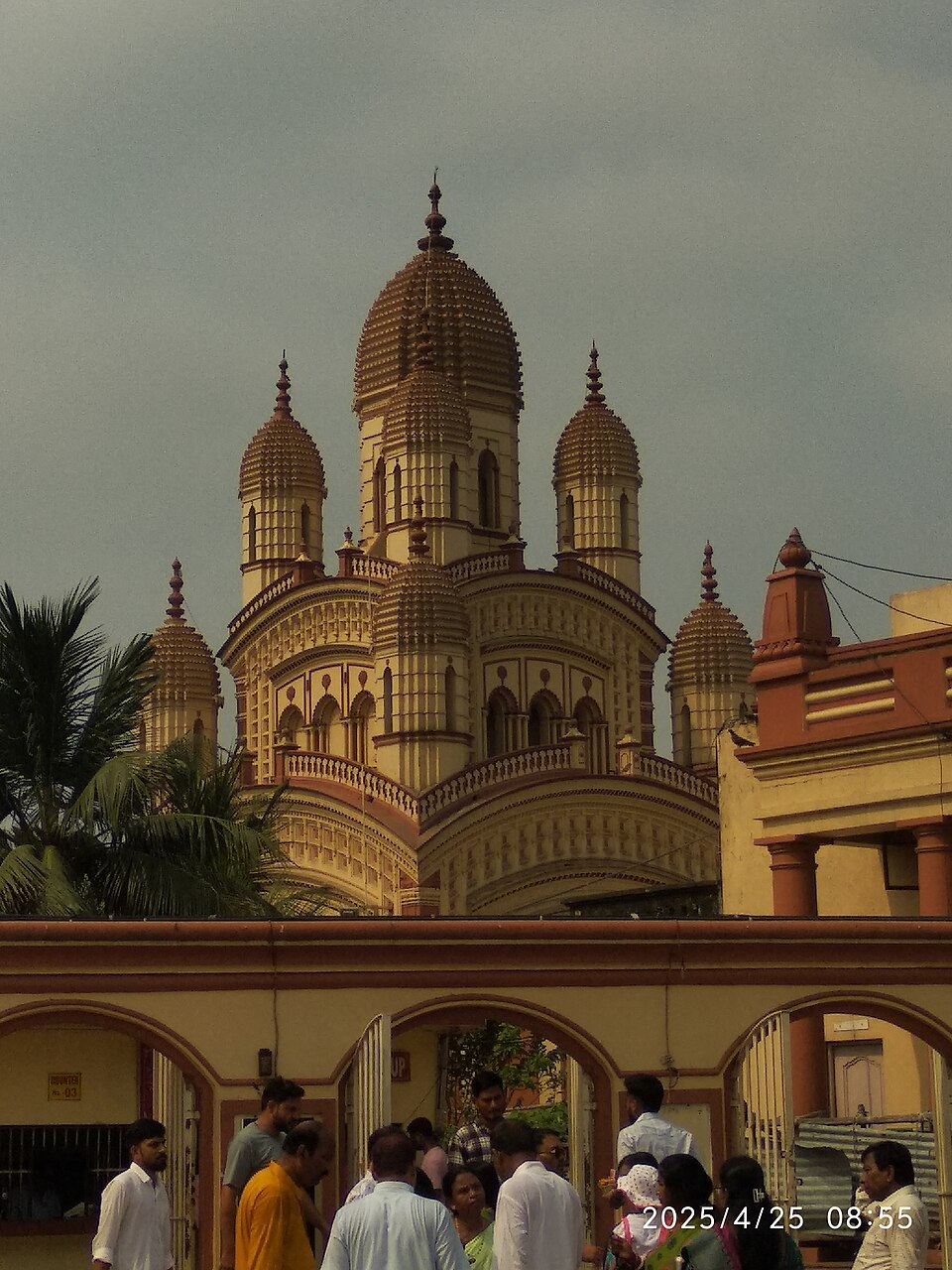
- The complex is organized around the nine-spired Kali temple, twelve Shiva shrines, a Vishnu shrine, courtyards and the Hooghly riverfront.
- Visitor rule
- Verify current darshan, seva, security and dress rules before travel
దేవాలయ సారాంశం
Dakshineswar Kali Temple in Kolkata, West Bengal, is a major nineteenth-century Kali shrine closely associated with Sri Ramakrishna and Bengal's devotional history. The principal devotional focus is Goddess Kali as Bhavatarini. The complex is organized around the nine-spired Kali temple, twelve Shiva shrines, a Vishnu shrine, courtyards and the Hooghly riverfront. Devotees seek darshan of Bhavatarini Kali and may also visit the Shiva temples and spaces associated with Ramakrishna. Current opening periods and crowd arrangements should be checked with the official temple. Because temple schedules, security rules, dress requirements, tickets, sevas and festival crowd controls can change, visitors should confirm the latest operational information with the temple, district administration or official tourism authority before travel.
చరిత్ర
Rani Rashmoni founded the temple complex, and the deity was installed in 1855. Sri Ramakrishna later served at Dakshineswar, making the site central to modern Bengal devotional history and the Ramakrishna tradition.
పవిత్ర సంప్రదాయం
The living sacred identity of Dakshineswar Kali Temple centres on Durga and the Shakta tradition. Sacred narratives, local belief and theological interpretation must remain distinct from documentary history.
ప్రాముఖ్యత
The spiritual importance of Dakshineswar Kali Temple comes from a major nineteenth-century Kali shrine closely associated with Sri Ramakrishna and Bengal's devotional history. Devotion centres on Goddess Kali as Bhavatarini, but the temple's significance also extends to the wider sacred geography of Kolkata and West Bengal. Kali Puja and other Devi observances draw large crowds.
దేవాలయ సమయాలు మరియు దర్శనం
Devotees seek darshan of Bhavatarini Kali and may also visit the Shiva temples and spaces associated with Ramakrishna. Current opening periods and crowd arrangements should be checked with the official temple. A first-time visitor should plan for security screening, footwear storage, modest temple-appropriate clothing and possible restrictions on photography or electronics. Peak festival days, weekends and auspicious dates may involve longer queues. Where paid sevas or special rituals exist, use only official temple or government-authorized booking channels. Recheck current schedules shortly before travel.
తరచుగా అడిగే ప్రశ్నలు
Where is Dakshineswar Kali Temple located?
It is in Kolkata, West Bengal, India.
Which deity is worshipped at Dakshineswar Kali Temple?
The principal devotional focus is Goddess Kali as Bhavatarini.
Why is Dakshineswar Kali Temple important?
It is a major nineteenth-century Kali shrine closely associated with Sri Ramakrishna and Bengal's devotional history.
What should first-time visitors know before darshan?
Expect security and footwear procedures, dress respectfully, carry only permitted items and verify current darshan or seva rules on official channels.
Which festivals are important at Dakshineswar Kali Temple?
Kali Puja and other Devi observances draw large crowds.
How can pilgrims reach Dakshineswar Kali Temple?
Dakshineswar is in north Kolkata and is accessible by road, suburban rail, Metro and river connections. The temple can be combined with Belur Math across the Hooghly.
Are sacred legends on this page presented as historical fact?
No. Darshn distinguishes living sacred tradition from historically verifiable chronology whenever the two are not the same.
Should visitors rely on old online temple timings?
No. Temple hours, queues, festival controls and seva schedules can change. Check the governing temple, district or official tourism source before travelling.