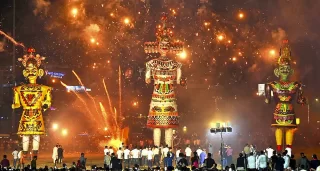
Dussehra / Vijayadashami
Dussehra, also known as Vijayadashami, concludes the autumn Navratri period. Traditions vary by region, including celebrations connected with Bhagwan Ram and the Ramayana as well as Devi worship and Vijayadashami observances.
About Dussehra / Vijayadashami
About Dussehra and Vijayadashami
Dussehra, also known as Vijayadashami, marks the culmination of the autumn Navratri period. Its sacred narratives and public traditions vary across India. In many places it is connected with Bhagwan Ram's victory over Ravana, while in Devi traditions Vijayadashami follows the worship of Durga.
Ramayana traditions
North Indian celebrations often include Ramlila performances and public remembrance of episodes from the Ramayana, with Dussehra associated with the victory of Ram over Ravana. Local celebrations may include processions or symbolic enactments, but the form differs from city to city.
Devi and Vijayadashami
In Bengal and other Durga Puja traditions, Vijayadashami is the concluding day of the festival cycle and is associated with farewell rituals and immersion of Durga images. This is one reason the same festival date can carry different devotional emphasis in different regions.
Explore the sacred connections
Darshn connects this guide with Ram, Durga, Navratri and Durga Puja where canonical relationships exist. These links let visitors understand the festival through its related deities and observances.
Planning locally
Procession routes, Ramlila programmes, immersion arrangements and temple schedules are local and can change each year. Check official local information before attending. Darshn keeps unverified dates distinct from governed verified occurrence data.