Overview
Shiva is revered across Hindu traditions as a major deity and is central to the many histories, philosophies, ritual practices, and communities gathered under the broad name Shaivism. He is worshipped in temples, homes, pilgrimage centres, and local traditions throughout South Asia and beyond. Darshn presents this page as an introduction to a living and internally diverse devotional world, not as a single account that replaces its many interpretations.
Significance
Shiva worship is central to Shaiva traditions and is deeply connected with major pilgrimage networks, including the Jyotirlinga tradition, Kashi, Kedarnath and many regional Shiva temples. Maha Shivratri is one of the principal festivals dedicated to Shiva, and widely recited devotional works include Om Namah Shivaya and the Maha Mrityunjaya Mantra.
Traditional context
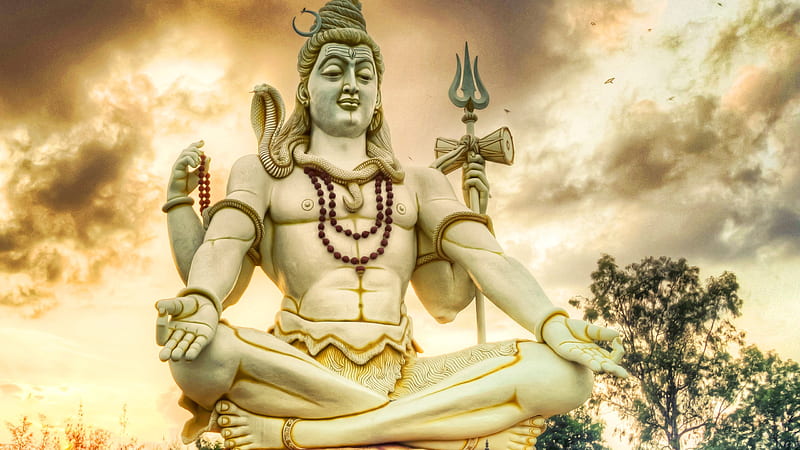
Traditional representations of Shiva include the meditating yogi, the Shiva Linga and Nataraja, Lord of Dance. Shiva is commonly associated with Parvati, Ganesha, Kartikeya and Nandi. Sacred narratives also connect Shiva with Mount Kailasa, Kashi, the river Ganga, the crescent moon, the third eye, the trishula, the damaru, serpents and sacred ash. Traditions vary by text, region and lineage, so Darshn treats forms, epithets and physical temple identities as governed facts rather than assuming every name is the same kind of relationship.
Forms and manifestations
Well-known forms include Nataraja, the cosmic dancer, and Ardhanarishvara, an integrated form of Shiva and Parvati. Other names and images such as Dakshinamurti, Bhairava, Pashupati, Mahakala, Neelakantha, Tripurantaka, and Lingodbhava belong to different textual, ritual, artistic, and regional contexts, and are understood variously across traditions.