
Overview
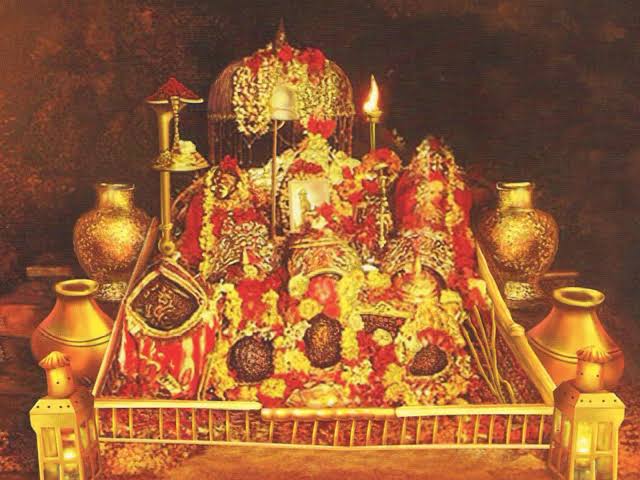
Mata Vaishno Devi is worshipped as the Divine Mother at the Holy Cave in the Trikuta Hills near Katra, Jammu and Kashmir. Pilgrims travel to the shrine for darshan of three naturally formed sacred rock formations, known as the Holy Pindies. Unlike a shrine centred on a sculpted idol, the cave tradition focuses on these natural formations. Katra is the starting point for the pilgrimage, while the shrine complex at Bhawan is the destination for darshan. The journey combines devotion with a mountain ascent and requires practical preparation, especially for pilgrims who are elderly or have limited mobility.
Significance
The three Holy Pindies are traditionally associated with Maha Kali, Maha Lakshmi and Maha Saraswati, expressing different aspects of the Divine Mother. This is the shrine tradition and should be understood as a religious association rather than an archaeological claim. Devotees commonly address the Goddess as Mata Rani and regard the yatra as an act of faith, prayer and personal discipline. The Shrine Board manages the pilgrimage, registration and facilities, so official instructions are more reliable than fixed timings or informal travel claims.
Traditional context
In the Vaishno Devi tradition, the sacred cave and the Trikuta mountain landscape are central to the pilgrimage. The three natural Pindies are the focus of worship; there are no conventional statues inside the Holy Cave. Devotional stories associated with Mata Rani belong to the living faith of pilgrims and should be distinguished from documented history.
Worship significance
Pilgrims seek darshan at Bhawan and offer prayers to Mata Rani. The Shrine Board also provides information about Aarti and organised worship services. Practices, entry arrangements and waiting procedures can change with crowd levels and operational conditions. Visitors should follow the current instructions at the shrine rather than rely on a guaranteed darshan time.
Regional traditions
The shrine welcomes devotees from across India. The forms of address Mata Rani, Mata Vaishno Devi and Vaishno Mata reflect widespread devotional usage. Navratri is an important period of Goddess worship, but travel arrangements and crowd conditions should be confirmed with the Shrine Board rather than assumed from the festival calendar.
Sacred places
Katra is the main pilgrimage base. The route proceeds towards the shrine at Bhawan in the Trikuta Hills, with places such as Banganga and Adhkuwari associated with the yatra. Pilgrims may visit Bhairon Temple after the Holy Cave darshan, subject to access and personal ability. The Shrine Board provides route and facility information.
Additional knowledge
Planning the Vaishno Devi yatra: Register through the Shri Mata Vaishno Devi Shrine Board and obtain the required RFID Yatra Access Card before proceeding. Online registrants should check where to collect their card. The mountain route requires suitable walking footwear, weather-appropriate clothing, drinking water and realistic time for rest. Registered ponies, palkis and other officially offered transport or assistance may be available, subject to current rules and availability. Check official route status, accommodation and weather advisories before travel. Use only the Shrine Board website for its booking services, not unauthorised agents. Official information: https://www.maavaishnodevi.org/ .